Your Employees Should Not Have to Manage Your Ego
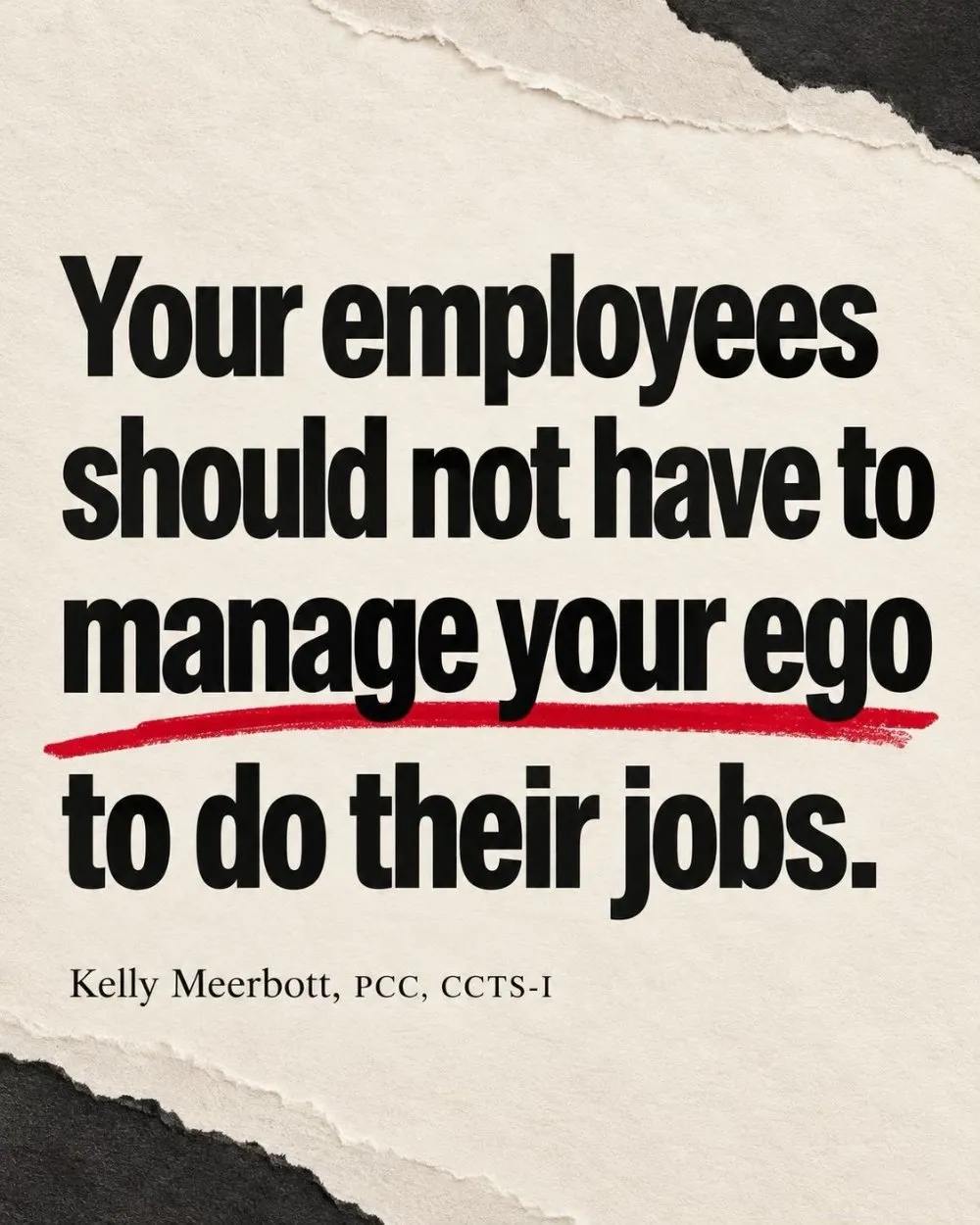
Your employees should not have to manage your ego to do their jobs.
When people have to:
• Wait until you’re in a good mood to deliver bad news.
• Make their ideas sound like yours so you’ll consider them.
• Rehearse a simple disagreement because they’re worried about your reaction.
• Reassure you after you’ve hurt them.
You’ve given them a second job.
And then you’re wondering why they seem exhausted, hesitant, or reluctant to take ownership.
Before calling someone “too sensitive,” consider how much sensitivity you require from everyone around you.
Before asking people to speak up, examine what happened the last time someone did.
Did you listen?
Did you interrupt?
Did their honesty turn into a debate about your intentions?
“I’m approachable” is something your employees get to decide.
In my work with executives, I care about what a leader does in the uncomfortable moment when someone challenges them. That moment tells people whether they can bring the next concern forward.
Sometimes leadership sounds like:
“You’re right. I interrupted you. Please finish.”
“I made that decision, and I own the consequences.”
“I apologized, but I haven’t changed the behavior. You deserve to see that change.”
You can hold high standards and take responsibility for how you treat people. Accountability becomes far more credible when it includes the person with the most power.
Here’s a question worth bringing into your next team conversation:
“What have I made difficult for you to tell me?”
Then give people time to answer.
Your response will teach them whether you meant it.
Ready to lead differently? Book a complimentary leadership coaching session with Kelly.
Leading a team or a company? See leadership development for organizations, try the Leadership Ripple Estimator, or read where Kelly has been featured in the media.
Kelly Meerbott, PCC, CCTS-I, Principal, YOU - Loud & Clear. I coach the leader within.